
The main difference between burnout and depression is scope. Burnout is usually tied to one area of life, most often work or caregiving, and tends to ease when you get real distance from that source of stress. Depression affects nearly every part of life, including things you used to enjoy, and usually doesn't lift with rest or a vacation.
That said, the two overlap a lot, and long-term burnout can turn into depression. If you're not sure which one you're dealing with, you're not alone. Here's how to start sorting it out.
What is burnout?
The World Health Organization describes burnout as an occupational phenomenon caused by chronic workplace stress that hasn't been successfully managed. It isn't classified as a medical condition, but it is very real. Burnout has three hallmark signs:
Exhaustion. You feel drained, physically and emotionally, most of the time.
Cynicism or detachment. You feel distant, negative, or numb about your job or responsibilities.
Reduced effectiveness. You feel like nothing you do is good enough, or you just can't get things done the way you used to.
Burnout isn't limited to office jobs. Caregivers, parents, students, healthcare workers, and people doing unpaid emotional labor all experience it. So do people who spend their days code-switching or masking parts of who they are.
What is depression?
Depression is a mental health condition that affects your mood, thinking, body, and daily functioning. A clinician typically looks for symptoms that last most of the day, nearly every day, for at least two weeks, such as:
Persistent sadness, emptiness, or hopelessness
Losing interest or pleasure in things you used to enjoy
Changes in sleep or appetite
Low energy and fatigue
Trouble concentrating or making decisions
Feelings of worthlessness or excessive guilt
Thoughts of death or suicide
Burnout vs. depression at a glance
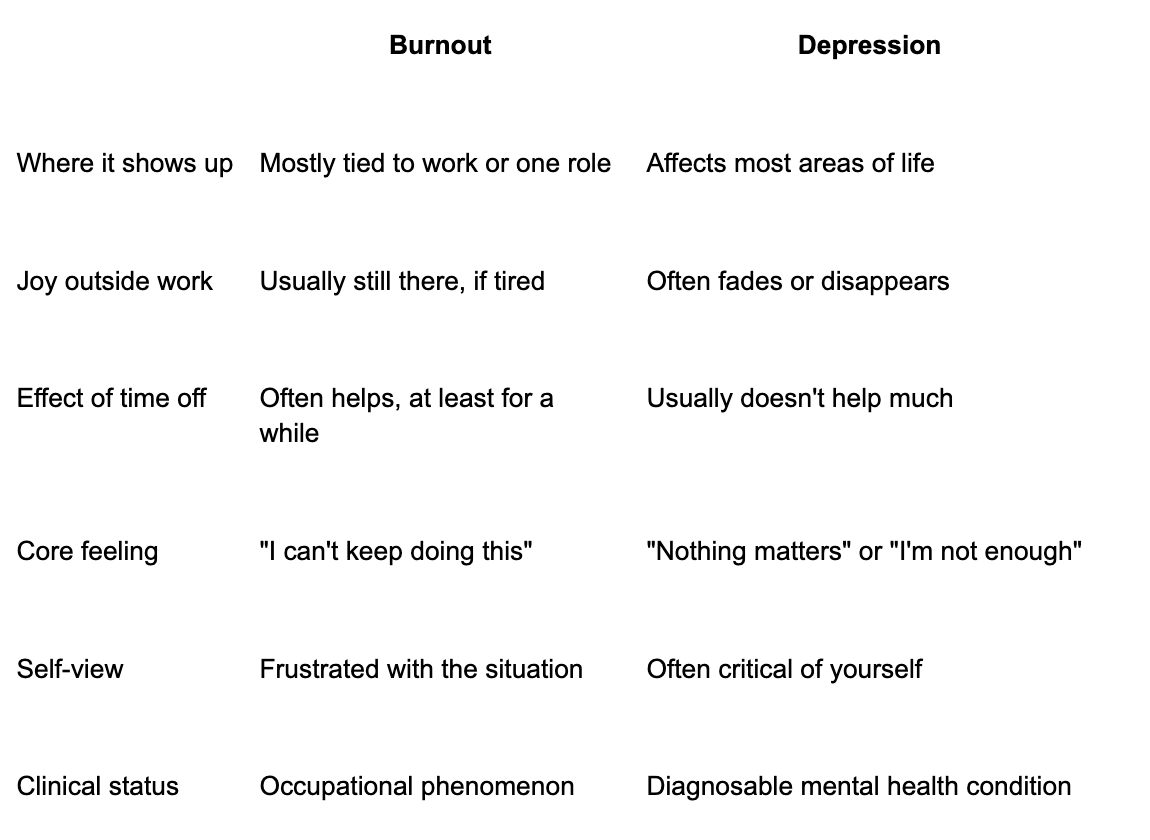
A simple question to ask yourself
Imagine you have two weeks completely free of your job or main responsibility. Do you picture yourself feeling relief, sleeping in, and enjoying things again? That points toward burnout.
If you imagine the time off still feeling gray, heavy, or empty, that may point toward depression.
This isn't a diagnosis, but it can help you notice what's going on.
Where burnout and depression overlap
Both can cause exhaustion, irritability, trouble concentrating, sleep problems, and pulling away from people. And when burnout goes on for a long time without relief, it can develop into depression.
That's why the label matters less than the pattern. If you've been running on empty for months, it's worth talking to someone, whatever you call it.
What helps with burnout
Real rest, not just a weekend of catching up on chores
Boundaries around work hours, availability, and what you say yes to
Reconnecting with what matters to you outside your role
Moving your body to help release built-up stress
Looking at the bigger picture, like workload, values, or whether the role still fits
What helps with depression
Depression usually needs more than rest. Therapy is one of the most effective treatments, and some people also benefit from medication prescribed by a doctor or psychiatrist. Small steps like daily routine, sunlight, movement, and staying connected to people can support recovery, too.
When to get support
Reach out to a therapist if:
You've felt exhausted, numb, or hopeless for more than a few weeks
Time off doesn't seem to help
You're pulling away from people you care about
It's affecting your work, relationships, or health
You're having thoughts of not wanting to be here
If you're having thoughts of suicide, please call or text 988 right away.
Support for burnout and depression at Live With Ease Therapy
At Live With Ease Therapy, we help clients work through overwhelm, low mood, chronic stress, and emotional exhaustion while building more balance and resilience. Our clinicians use approaches like CBT, Somatic practices, Expressive Art Therapy, IFS and Mindfulness practices, and we understand the extra weight many LGBTQIA2S+, BIPOC, and first-gen clients carry at work and at home.
Learn more about our Anxiety, Burnout & Nervous System Regulation support, or schedule a free consultation. Sessions are available in person in Long Beach and online throughout California.
Frequently Asked Questions
Can burnout turn into depression? Yes. Long-term, unaddressed burnout can lead to depression, which is one reason it's important to get support early.
Is burnout a mental health diagnosis? No. The World Health Organization describes burnout as an occupational phenomenon, not a medical condition. Depression is a diagnosable condition.
Will a vacation fix burnout? A break can help, but if the source of stress stays the same, burnout often returns. Lasting change usually means adjusting boundaries, workload, or expectations.
Can a therapist help me figure out whether it's burnout or depression? Yes. A therapist can help you sort through your symptoms, understand what's driving them, and create a plan that fits.
Reviewed by Zane Julien, Lic # LMFT 45035, Live With Ease Therapy.
If you are in crisis, call or text 988 (Suicide & Crisis Lifeline) or call 911.
